Artificial intelligence is reshaping how small and midsized businesses compete, grow, and operate.

What if your business could run critical workflows around the clock — without adding employees?
That’s the promise of digital labor: AI-powered agents and intelligent automation systems that perform cognitive tasks once reserved exclusively for human workers. Unlike traditional software that waits for instructions, digital labor works autonomously — monitoring, deciding, executing, and even prompting your team for approvals — continuously, and at scale.
According to Pax8’s Agentic Workforce Economy Report, AI-driven automation, and emerging technologies like agentic labor are changing the business landscape for SMBs. In this article, we’re highlighting several of the report’s key findings and sharing why they matter to organizations that are evaluating or expanding their AI strategy.
Managed Intelligence Providers Are the New Essential Enablers of Business Transformation
The future of business will not be built by legacy systems or human-scale operations.
It will be built by autonomous intelligence, guided by the vision and trust of those who understand their customers best. The relationships built over decades, grounded in service, trust and proximity, will become their greatest assets in the years ahead.
The next decade will not simply belong to those with the biggest budgets, but to those with the biggest ideas and the networks of partners and AI agents needed to execute them.
The Barriers to Building Are Falling
We are witnessing the convergence of trends that lower the barriers to building: it is easier to start a business, easier to access cutting-edge technology, and easier to scale rapidly with AI doing the heavy lifting.
An SMB with a powerful idea can truly become a market maker overnight.
Opportunity is no longer limited by size, but by imagination and execution. Those who move quickly and think differently will define what comes next. Momentum now favors the bold, the curious and the connected.
What is Agentic Labor? An Interconnected Operating System for SMBs
Agentic labor refers to the use of AI-powered software agents that can perceive their environment, make decisions, and take action with minimal human intervention.
Unlike traditional automation, which follows rigid, pre-programmed rules, agentic labor involves systems that can reason through multi-step tasks, adapt to changing conditions, and collaborate with other agents or people to achieve a defined goal. These agents can send emails, analyze data, manage workflows, escalate decisions when needed, and even deploy other agents to handle subtasks — all autonomously.
This shift is significant because it changes the economics of how work gets done.
For most of modern economic history, small business growth followed a predictable pattern: increasing revenue required adding people.
Headcount and output generally grew together, while the cost, availability, and geographic limits of human labor defined the ceiling of what small and midsized businesses could realistically achieve.
That relationship is now beginning to change.
A New Category of Digital Labor
AI agents, automated workflows and intelligent software systems have introduced a new category of labor into the SMB economy; one that operates continuously, scales without hiring, and performs cognitive tasks once reserved for human workers.
The implications are structural, operational, financial and competitive, and they are already underway.
The Macroeconomic Signal Is Clear
U.S. labor productivity has risen from 1.43% to 2.16% annually since late 2022, a pace not seen since the early years of the internet economy.
Deloitte’s modeling tells us why:
- Businesses that move from basic to intermediate AI adoption see profitability uplifts of roughly 45%.
- Those that reach full integration see uplifts of 111%.
The modeling is drawn from a study of 1,000 Australian SMBs; a context whose structural parallels to North American small business markets, including comparable firm-size distribution, digital infrastructure access and labor cost dynamics, make the directional findings applicable beyond their original geography.
The curve is exponential.
The Real Divide: Surface Adoption vs. Full Operationalization
Beneath the headline adoption figures lies a more complicated picture.
Three quarters of SMBs are now investing in AI, and more than half report active usage. But adoption has proceeded unevenly, and in most cases, without the organizational foundations required for AI to deliver compounding returns.
The divide is not between adopters and non-adopters.
It runs between organizations that have deployed AI at the surface and those that have restructured their workflows, data infrastructure and governance models around it. That distinction, between using AI and operationalizing it, is the defining competitive variable of the coming decade.
Agentic Labor Is Both the Opportunity and the Risk

Agentic labor, as this report defines it, is not a single technology or a discrete product category. It is an interconnected operating system that touches every dimension of the SMB business model at once.
AI agents:
- Change hiring strategies
- Alter revenue-per-employee economics
- Create new demands on data infrastructure
- Require governance frameworks most small businesses haven’t yet built
They also expand the cybersecurity attack surface in proportion to their value: 88% of SMB breaches now involve ransomware, far surpassing the 39% rate seen in larger enterprises.
The same agents that drive efficiency are the ones opening new vulnerabilities.
Agentic labor is both the opportunity and the risk, and it demands a unified response rather than a piecemeal one.
Why Now? Four Compounding Inflections That Changed Everything
Every major technology wave has a moment when the economics shift from experimental to operational, when the capability stops being impressive and starts being dependable enough to build a business around.
That moment arrived for digital labor in the second half of 2025.
It arrived not because of a single breakthrough but because of four compounding inflections that happened in close succession.
1. Capability Threshold Was Crossed
Frontier models crossed into a qualitatively different range of performance on the tasks that matter most for business execution: coding, reasoning, multi-step tool use, and sustained task completion across longer workflows.
The relevant shift was operational reliability. Models became good enough at turning intent into execution that the failure rate on real business tasks dropped below the threshold at which human oversight of every output was required.
That change made autonomous action practical in a way it had not been before.
2. The Agentic Stack Matured
Model capability alone does not produce deployable digital labor.
What makes model gains usable in real operating environments is the surrounding infrastructure: orchestration layers, harnesses, execution frameworks, memory and context management, tool calling protocols and the emerging standard of the Model Context Protocol (MCP) that allows agents to interact reliably with external systems.
That stack matured rapidly alongside the models in 2025. The combination, capable models running on deployable infrastructure; is what moved digital labor from demonstration to production.
3. The Persistent Agentic Loop Emerged
The AI interactions most businesses have experienced to date are session-based: a human opens an interface, submits a prompt, receives a response, closes the session. That model is giving way to something structurally different.
Always-on agents remain active between sessions. They monitor open commitments, surface next actions, request approvals, chase missing context and increasingly prompt the human rather than waiting to be prompted.
That inversion; from AI-as-tool to AI-as-operating layer; changes the rhythm of work itself, and it is already becoming visible in the workflows of the businesses that have moved furthest along the maturity curve.
4. Agentic Monitoring and Operational Resiliency Became a Practice Category
Autonomous agents operating across business workflows require a control plane; observability into what agents are doing, governance over what they are permitted to do, recovery mechanisms for when they fail, and policy frameworks that define the boundaries of autonomous action.
The emergence of that control plane is what makes managed intelligence a rinse-and-repeat service model rather than a bespoke deployment exercise.
It is also what makes the managed intelligence provider an essential partner rather than an optional one. The businesses that deploy agents without the monitoring and resiliency layer are accumulating operational risk at the same rate they are accumulating productivity gains.
How the Four Inflections Compound
These four inflections are not independent trends. They compound. The capability threshold made more work executable. The agentic stack made it deployable. The persistent agentic loop changed how work is initiated and coordinated. Monitoring and resiliency make it governable and repeatable at scale.
Together, they mark the beginning of a phase change in the SMB economy, the conditions under which AI adoption becomes workforce re-architecture.
At the Center of This Transformation: The Technology Partner Ecosystem
SMBs are not, and largely cannot be, the primary architects of their own agentic labor strategies. AI expertise has become the third most important attribute SMBs seek in a managed service provider (MSP), behind only threat prevention and round-the-clock support. Yet fewer than half of MSPs have built or deployed AI-specific capabilities for their clients.
A Widening Supply-Demand Gap
MSP confidence in their ability to guide SMBs on AI deployment has fallen from 90% to roughly 50% in a single year, even as demand has surged. The result is a structural supply-demand mismatch at precisely the moment the stakes are highest.
The Rise of the Managed Intelligence Provider (MIP)
That gap is giving rise to a new category of provider.
As SMBs deploy digital workers, the managed service providers who serve them are being asked, and in many cases compelled, to evolve into what Pax8 has termed Managed Intelligence Providers (MIPs): technology partners who do more than merely manage infrastructure but also orchestrate the intelligence flows that run the business.
MSP vs. MIP: What’s the Difference?
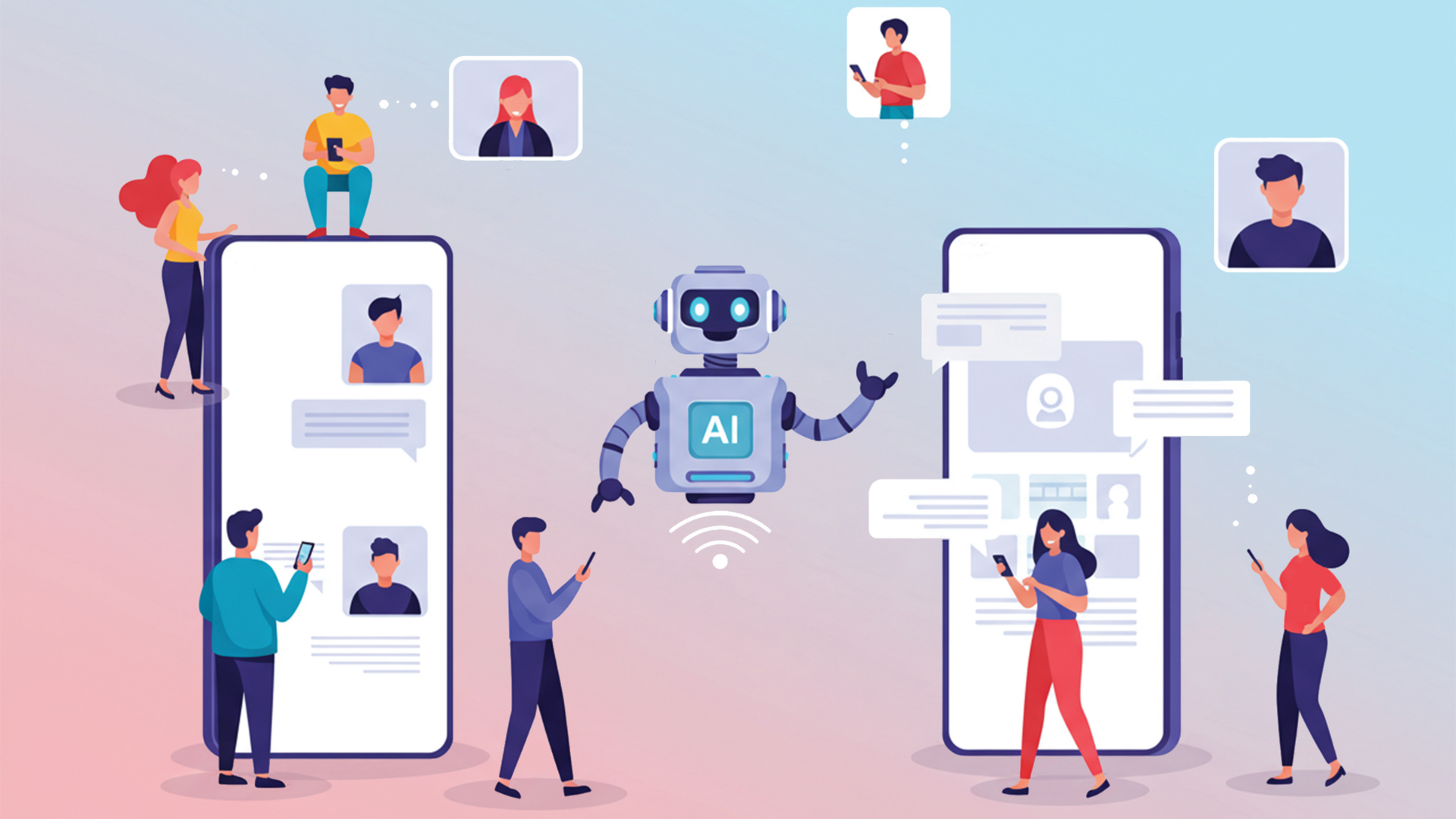
Where the MSP manages systems, the MIP manages outcomes:
- Deploying and optimizing AI agents
- Governing autonomous decision systems
- Integrating data environments
- Ensuring the operational logic underlying the agentic workforce is performing, compliant, and compounding in the right direction.
The Economics Reflect the Stakes
AI services in the managed services sector are growing at 59% annually, compared to 13% for traditional managed services.
The margin structure, the value proposition, and the competitive dynamics of the channel are all being rewritten at the pace of the clients who are already running digital workforces that nobody is governing.
The Central Thesis
Agentic labor is not a future scenario to prepare for. It is a present-day shift that organizations need to understand and navigate.
The SMBs that recognize AI as more than just another productivity tool—and instead build the data, governance, security, and workflows needed to support it—will be better positioned to adapt, compete, and grow in the years ahead.
The race to managed intelligence is not just about adopting new technology. It requires strategic planning, organizational readiness, and trusted partners who can help organizations implement AI responsibly and effectively.
Whether your organization is just beginning to explore AI or looking to expand existing initiatives, now is the time to evaluate your strategy. The technology is advancing quickly, but long-term success will depend on having the right foundation in place.
If you’re looking for guidance on developing an AI strategy, establishing governance, or identifying practical use cases for your business, our AI Advisory Services can help you move forward with confidence. Talk to a WIN Specialist, if you would like to learn more.