Every major technology shift has changed the way people work. It has also forced organizations to rethink how they protect their people, information, and systems.
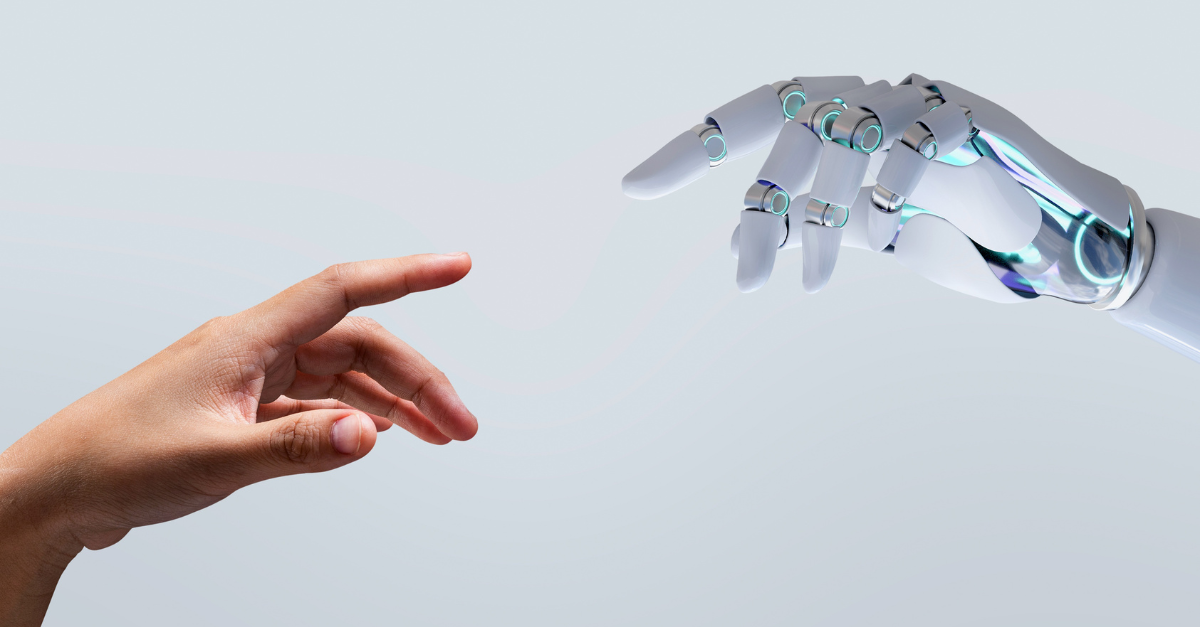
What makes AI different is that AI isn’t simply changing where we work or how we communicate. It’s beginning to influence how we create, analyze, make decisions, and complete work itself. Employees can use AI to summarize sensitive information, generate content, analyze data, write code, and automate tasks. Oftentimes without IT knowing exactly how or where that information is being used.
That creates a new set of security questions for organizations.
- What information are employees putting into AI tools?
- Which tools are approved?
- Who has access to them?
- How can an organization tell whether an AI-generated message is legitimate?
- What happens when AI makes it easier for an attacker to impersonate a trusted person or create a convincing phishing attempt?
These questions might feel overwhelming, but the answer is not to avoid AI. Just as organizations didn’t stop using the internet, email, or remote work because of the risks they introduced, businesses need to find ways to adopt AI while managing those risks.
To understand how to do that, it helps to look at how organizations have responded to major technology changes in the past.
How Has Workplace Technology Changed Before?
Technology has a long history of changing the workplace faster than organizations can establish rules for using it safely. Each shift introduced new security challenges, but it also led to new practices that eventually became standard.
Below are just a few examples:
- The internet connected businesses globally, creating a new need for cybersecurity. Connecting business systems to the internet opened the door to new threats. Organizations responded by developing firewalls, security policies, monitoring, and dedicated cybersecurity practices.
- Email transformed business communication, giving attackers a new way to reach employees. Spam, phishing, and malicious attachments became everyday security concerns. Organizations responded with email filtering, secure gateways, authentication, and employee awareness training.
- Remote and hybrid work changed where work happened, expanding the attack surface. When employees no longer worked exclusively from a corporate office, organizations had to rethink the traditional security perimeter. VPNs, endpoint protection, multifactor authentication, and stronger identity controls became increasingly important.
While there are similarities to the technologies listed above, AI isn’t just another communication or productivity technology. It can process organizational data, generate convincing content, interact with systems, and increasingly make decisions or perform tasks on behalf of employees.
How Do You Secure Your Organization in the AI Era?
The good news is that securing your organization in the AI era doesn’t require reinventing cybersecurity. Instead, it involves reviewing the fundamentals many organizations already have in place, like clear policies, identity controls, employee training, and layered defenses.
There are five areas that deserve particular attention.
1. Establish Clear Rules for AI Use
Employees should know which AI tools the organization has approved, what information they can and cannot enter into those tools, and who they should contact when they’re unsure about something.
The goal isn’t to prohibit AI but instead give employees a safe and practical way to use the technology.
The NIST AI Risk Management Framework provides a vendor-neutral starting point for organizations developing their approach to AI risk. From there, policies should reflect the organization’s data, industry, and specific use cases.
Most importantly, an AI policy needs to be communicated, reviewed, and updated as the organization’s use of AI evolves.
2. Strengthen Identity and Access Controls
AI may make phishing more convincing, but a compromised password still needs a way into your environment.
That’s why basic identity protection remains important. Multifactor authentication should be enabled wherever possible, and employees should have only the access they need to do their jobs.
Least-privilege access can also limit the damage when an account is compromised. If an attacker gains access to one employee’s credentials, they shouldn’t automatically gain access to everything that the employee, or the organization, can reach.
3. Know How AI Is Being Used
Organizations should understand which AI tools employees are using, how those tools are being used, and what types of information are being entered into them.
As you create a list of AI tools that are acceptable for company use, explain to your team why certain tools are approved or restricted. Additionally, provide employees with a way to request new AI tools for consideration. When employees have a useful, secure alternative, there’s less reason to work around IT.
4. Update Security Awareness Training
AI is changing what a suspicious message looks like. The old advice to “look for typos” isn’t enough when attackers can use AI to create polished, personalized messages. Employees need to pay more attention to context and intent.
That means verifying unusual requests through another communication channel, particularly when money, credentials, or sensitive information are involved. It also means teaching employees about AI-specific risks such as deepfakes, impersonation, and the safe handling of information in AI tools.
5. Build Layers Instead of Relying on One Tool
No single security product can address every risk. AI-related or otherwise.
A strong security strategy uses multiple controls that support one another. Email security can stop a malicious message. Multifactor authentication can make a stolen password less useful. Endpoint protection can identify suspicious activity. Network monitoring can provide additional visibility. Detection and response can help contain an incident. Backups can help an organization recover when other defenses fail.
That’s the value of a layered approach. If one control misses something, another has an opportunity to catch it.
AI Can Be Part of the Solution, Too
There is another side of the AI security conversation that can get overlooked amid the concerns surrounding AI. That is, while AI may give attackers new capabilities, it can also help organizations defend themselves.
AI and machine learning are already being used in security tools to identify unusual behavior, correlate activity across systems, and help security teams respond to threats more quickly. For organizations with small IT teams, automation can also reduce the amount of manual work required to monitor and respond to security events.
For example, managed detection and response services can use automated analysis and security expertise to identify suspicious activity and help contain threats without requiring an organization to maintain a large security operations team of its own.
Ready to Learn More?
If you’re evaluating how AI fits into your organization’s technology and security strategy, we can help. Our team works with organizations across the Upper Midwest on security awareness training, identity security, managed detection and response, and practical AI adoption. Talk to a WIN Specialist to learn more.